
Occupational Therapy in Dwarka, Delhi
At Babblz India, our Occupational Therapy Centre in Delhi is committed to empowering children by helping them overcome physical, developmental, and sensory challenges.

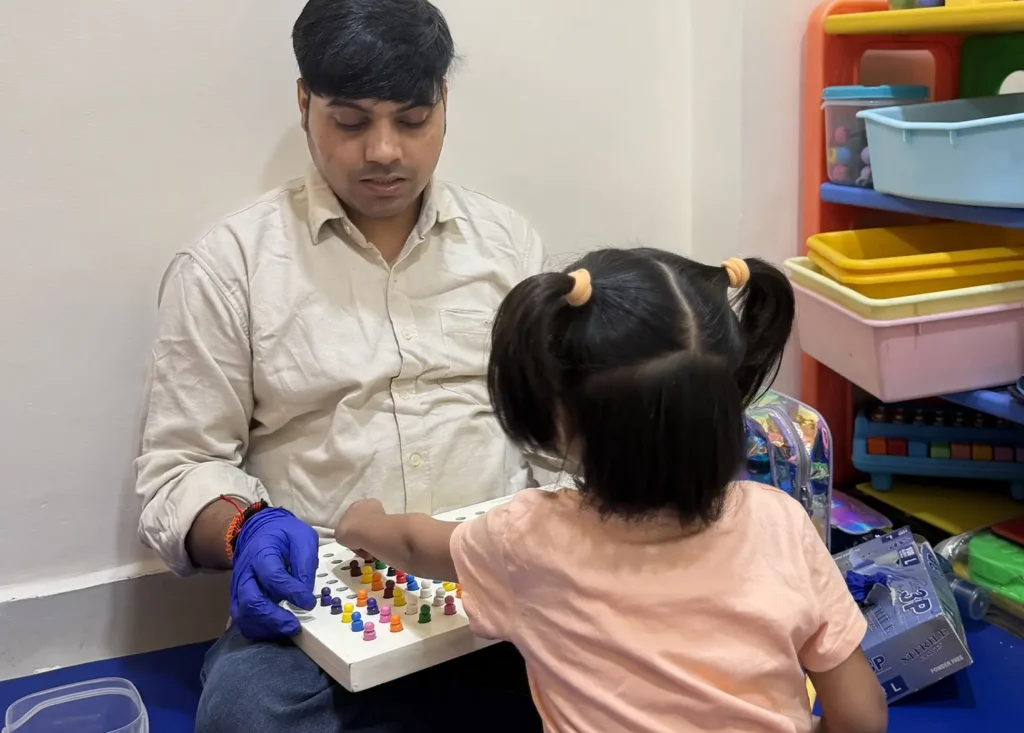


Occupational Therapy Centre in Delhi for Children
Our team of expert pediatric occupational therapists provides personalized therapy that enhances independence, confidence, and overall well-being. If your child struggles with daily tasks such as dressing, writing, or play, our evidence-based programs in Occupational Therapy for Children offer the tools and support needed for meaningful progress.
What Is Occupational Therapy for Children?
Occupational therapy (OT) is a specialized therapeutic approach designed to help children develop the skills they need to perform everyday activities. At our Pediatric Occupational Therapy Centre in Delhi, we focus on:
- Fine motor skills (e.g., handwriting, buttoning clothes)
- Gross motor skills (e.g., balance, coordination)
- Sensory integration and regulation
- Visual motor coordination
- Self-care routines
- Academic readiness and school participation
With a strong emphasis on Child Development Support, our therapies are tailored to meet the unique developmental goals of each child.


Signs Your Child May Need Occupational Therapy
Our programs offer targeted therapy combined with holistic child development support to ensure progress across all areas.

Self-Care Challenges
Difficulty with dressing, feeding, or grooming independently.
Delayed Play Skills
Trouble engaging in pretend play, using toys creatively, or socializing with peers.
School-Related Struggles
Problems with handwriting, focus, or completing school tasks.
Fine Motor Delays
Difficulty using utensils, drawing, or handling small objects.
Gross Motor Difficulties
Poor coordination, clumsiness, or discomfort with physical activities.
Sensory Sensitivities
Over- or under-reacting to sound, touch, taste, or movement.
Why Parents Choose Babblz for Occupational Therapy
Families across Delhi trust Babblz India for comprehensive and compassionate care. Here’s why our Pediatric Occupational Therapy programs stand out:
- Self-Care Improvement: We help children master everyday tasks, building self-reliance and self-esteem.
- Enhanced Play Skills: Our therapies foster creativity, cognitive growth, and peer interaction.
- Academic Readiness: We support learning through fine motor skill development and attention-building strategies.
- Motor Skill Development: From writing to running, we enhance both fine and gross motor abilities.
- Sensory Integration: Customized plans help children navigate sensory processing challenges with confidence.
Choosing Babblz means partnering with a leading Occupational Therapy Centre in Delhi dedicated to measurable outcomes and lifelong progress.

Occupational Therapy Questions Parents Often Ask

Therapy fees vary depending on the service, assessment requirements and session plan. Our team will explain applicable fees before therapy begins.
- More questions?
- See All FAQs →
What is occupational therapy for children, and what skills can it support?
Occupational therapy, commonly called OT, helps children participate more comfortably and independently in everyday activities. Many parents associate OT only with sensory activities, but its scope is much wider. It can address difficulties related to dressing, feeding, handwriting, coordination, play, self-care and participation in school routines. For example, if your child struggles to hold a spoon, manage buttons, use classroom materials or coordinate their hands during activities, an occupational therapist can assess the underlying difficulties. At Babblz, our focus is on developing practical skills that make a meaningful difference in your child’s daily life.
What signs may indicate that my child could benefit from occupational therapy?
You may consider an OT assessment if your child consistently struggles with activities that other children of a similar developmental level are beginning to manage. For example, they may have difficulty holding a pencil, using utensils, dressing independently, coordinating movements or participating in certain play activities. Some children also experience sensory-related difficulties that affect activities such as grooming, eating or managing classroom environments. One difficulty alone does not necessarily mean your child needs therapy. We consider their age, developmental history and the impact these challenges have on everyday participation before making recommendations.
Can occupational therapy help with handwriting, dressing, feeding, play or coordination?
Yes. These are among the areas that paediatric occupational therapy may address when an assessment identifies a need. For example, a child struggling with handwriting may require support with hand coordination, pencil control, posture or other skills involved in writing. Similarly, a child who finds dressing difficult may benefit from practising the task in smaller, manageable steps. Sometimes therapy involves developing a skill, while in other situations we may suggest changes to the activity or environment to make participation easier. Our goal is not simply to practise an exercise during a session but to help your child use the skill in real-life situations.
What happens during an occupational therapy assessment?
Our occupational therapist first discusses your child’s developmental history, daily routine and the difficulties you have observed at home or school. The therapist then observes relevant activities, which may include play, hand movements, coordination, functional tasks or sensory responses. For example, if your main concern is handwriting, the assessment may explore several skills involved in writing rather than focusing only on how your child holds a pencil. After understanding the difficulties and strengths, we discuss which areas require support and establish practical therapy goals.
How are therapy goals chosen, and how can parents practise skills at home?
We select goals according to the activities your child currently finds difficult and the skills that would improve their everyday independence. For example, one child’s goal may be learning to use a spoon, while another may be working towards managing clothing or participating more comfortably in classroom tasks. We also guide parents on appropriate activities to practise at home. These should fit naturally into daily routines rather than become an additional source of pressure. Progress is reviewed regularly, and we encourage parents to tell us if a suggested activity is difficult to follow or causes frustration.
Have a Question About Your Child's Development?
Share a few details and our team will call you back — no long forms, no pressure. If you’d rather talk now, WhatsApp or call us directly.


